
01
The brief
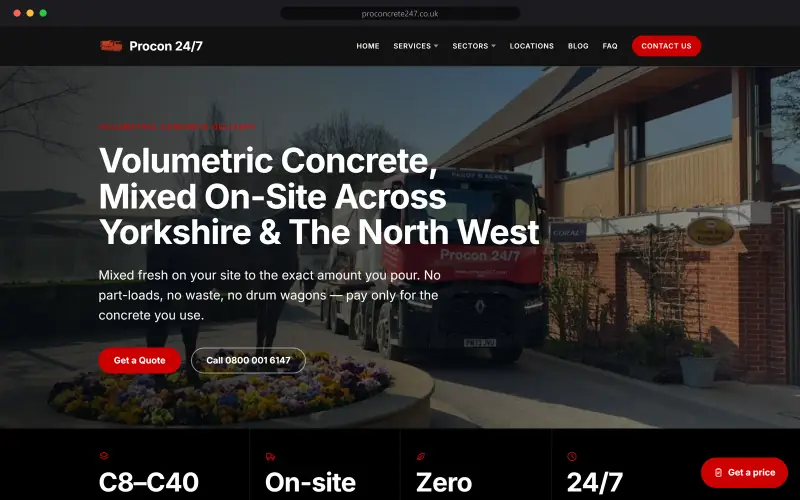
A concrete supplier with zero digital presence beyond a Google Maps pin. Full digital build (site, SEO, paid) reconciled against their own invoice ledger every week since 2022, and rebuilt onto Astro in 2026.
 Client
A Google Ads case study: £1.34M of tracked revenue on £150,443 of ad spend, an 8.9× return on ad spend, nearly five years and still running.

The identity the site was built on: their mark, their colours and their type, used the same way on every page.
Aa
Volumetric concrete, mixed on site.
Body · InterEvery figure below came out of Procon's own revenue workbooks and was reconciled invoice by invoice, not exported from an ad dashboard.
| Year | Spent | Returned |
|---|---|---|
| 2022 | £35,621 | £280,132 |
| 2023 | £20,899 | £374,578 |
| 2024 | £31,315 | £186,102 |
| 2025 | £24,609 | £207,321 |
| 2026, to September | £37,999 | £289,560 |
| Total | £150,443 | £1,337,693 |
A concrete supplier with zero digital presence beyond a Google Maps pin. Full digital build (site, SEO, paid) reconciled against their own invoice ledger every week since 2022, and rebuilt onto Astro in 2026.
Procon arrived with one Google Maps listing and no website. They were turning down work because the inbound funnel was a phone-tag mess. The brief was not 'make us a website'; it was 'make us a lead engine that survives the seasonal swings in concrete demand'. That horizon has since been tested for real: category search demand fell 47% year on year into 2026, and the account had to hold its return through the decline rather than in spite of it.
Phase 1 was a conversion-engineered site with quote-request forms by product category. Phase 2 was monthly long-form content targeting the technical queries a project manager uses when speccing concrete: including Procon's own patented URS mixes, URS 420 for general structural work and URS 450 for heavy duty, both of which set in two hours. Phase 3 was a managed Google Ads programme with weekly ROAS reporting reconciled against their invoice ledger, not platform-reported conversions. In 2026 we rebuilt the site on Astro for speed and split the Yorkshire campaign into single-city ad groups. In September 2026 the measurement was tightened again: enhanced conversions for leads on the quote forms, Google forwarding numbers on eight town lines with only calls of 60 seconds or more counted, and a paid-only lander for each campaign town, so the account learns from real enquiries rather than clicks.
What was chosen, what it replaced, and why. Each one is a call we would make again.
Within two weeks of launching the new site, we saw a 37% increase in quote requests. The design isn't just modern, it's built to convert.
Two we own. We should have shipped call tracking in month one instead of month four: the attribution gap cost six months of confident spend decisions. And during the Astro rebuild an Astro define:vars block trapped gtag inside its own scope, so every Ads conversion silently stopped firing until we caught it. Reporting off the client's invoice ledger rather than the platform is the only reason the number was still trustworthy while that bug was live.
The account above is run by David personally, measured against the client's own revenue rather than the ad platform. That is one client's result, not a forecast for yours. How the same method applies to another business is on the Google Ads management page. If you already advertise, start with a free Google Ads audit, or read how one person runs the account.
Every build on this site has its own page with the same figures, the same decisions and the same client's words.
A free 30-minute audit of your account, tracking and landing page, with a straight answer on what is realistic.


